
If there is only one Chinese painting you need to know, it is this one: 「清明上河圖」 (Qingming Shànghé Tú), or the Riverside Scene at Qingming Festival.
Created by the Song Dynasty artist Zhang Zeduan (張擇端), this five-meter-long masterpiece is more than just a beautiful landscape. It is a time machine into a 1,000-year-old megacity, a cinematic experience, and—most surprisingly—a daring work of political satire.
Video Lesson Part 1
Video Lesson (Chinese Version) Part 1
Original Chinese Script With English Translations:
Traditional Chinese Script (Click to Expand)
有這樣的一幅巨作,讓後世每個朝代的畫家爭相臨摹、改版創作,讓人訝異的是,它不是描繪宮廷生活,不是畫神話傳說或帝王將相,而是描寫八百多位市井小民的日常,僕役、官員、官兵、商販、算命師、說書人、理髮師、醫生還有乞丐。但這個日常裡隱藏著許多的危機,甚至還有間諜的存在。沒錯,這是一個像小說般的畫。這就是宋朝的「清明上河圖」,作者是張擇端。
There is such a masterpiece that prompted painters of every subsequent dynasty to eagerly copy and create their own adapted versions. What is surprising is that it does not depict courtly life, nor does it paint mythical legends or emperors and generals. Instead, it portrays the daily lives of over 800 ordinary citizens: servants, officials, soldiers, vendors, fortune-tellers, storytellers, barbers, doctors, and even beggars. Yet, within this everyday life hides many crises, and there is even the presence of spies. That’s right, this is a painting that reads like a novel. This is the Song Dynasty’s Along the River During the Qingming Festival (Qingming Shanghe Tu), painted by Zhang Zeduan.
在我們說清明上河圖之前,我們必須簡短介紹宋朝。宋朝在西元960年—1279年,給你個概念,歐洲同時期是中世紀全盛時期、十字軍東征。 宋朝是中國歷史甚至世界歷史上輝煌的高科技朝代,發明了活字印刷、火藥、指南針,軍權衰弱但科學發達、社會秩序良好。與此同時,歐洲還沒有文藝復興,你可以想像宋朝的首都的地位,就跟現在的東京、倫敦、紐約一樣。而「清明上河圖」的故事,就發生在當時的首都,汴京,一個人口超過百萬的超級大城市。
Before we talk about Along the River During the Qingming Festival, we must briefly introduce the Song Dynasty. The Song Dynasty lasted from 960 to 1279 AD. To give you an idea, Europe during the same period was in the High Middle Ages, the era of the Crusades. The Song Dynasty was a brilliant, high-tech era in both Chinese and world history, inventing movable type printing, gunpowder, and the compass. Although its military power was weak, its science was advanced and its social order was excellent. At the same time, Europe had not yet experienced the Renaissance. You can imagine that the status of the Song Dynasty’s capital was just like modern-day Tokyo, London, or New York. And the story of Along the River During the Qingming Festival takes place in the capital of that time, Bianjing, a mega-city with a population exceeding one million.
接下來,我們要先教你怎麼讀畫,沒錯,不是看畫,而是「讀」。我們要先從「清明上河圖」的裝裱形式介紹,也就是「手卷」。「卷」是中國最古老的書畫裝裱形式,手卷是其中一種。有個「手」字,猜猜看是什麼意思?沒錯,「要用手拿」,首先你將畫展開到與肩同寬,然後「左舒右卷」,左手鬆著,然後右手慢慢地卷,看完一段再看一段,這樣的形式讓手卷裡可以藏很多慢慢敘述的故事,就跟電影膠卷一樣。手卷通常在三十公分高,但長度最長可以達十數公尺。你可以感受到,這跟大部分欣賞畫作的邏輯不一樣,不是全部像美術館看畫全部拉出來展示給你看的感覺,而是像是在家看小說、看漫畫,是只有你自己一個人看的私密體驗。接下來,我們就要來說「清明上河圖」的故事了。
Next, we are going to teach you how to “read” a painting. That’s right—not just look at it, but “read” it. We should start by introducing the mounting format of Along the River During the Qingming Festival, which is the “handscroll” (Shoujuan). The scroll is China’s oldest form of mounting calligraphy and paintings, and the handscroll is one variation. It has the word “hand” in it, so guess what that means? Correct, “it must be held with your hands.” First, you unroll the painting to about shoulder-width, and then you “unroll with the left and roll with the right”—your left hand loosens it while your right hand slowly rolls it up, viewing it section by section. This format allows the handscroll to hide many slowly unfurling stories, just like a roll of movie film. Handscrolls are usually about 30 centimeters high, but their length can reach up to over a dozen meters. You can tell that this follows a different logic from how most paintings are appreciated. It’s not like looking at a painting in an art museum where the whole thing is pulled out and displayed for you all at once; rather, it’s like reading a novel or a comic book at home—a private experience meant for just you alone. Next, let’s dive into the story of Along the River During the Qingming Festival.
故事從汴京的郊區開始說起,從早晨的薄霧中走來一支驢隊,運送著溫酒的木炭。宋朝人最著名的就是愛喝酒,甚至連他們的救濟物資都會有酒,因為當時進入小冰期,喝酒能暖身。領頭的驢熟練地轉向旁邊的橋,過了橋後,有一棟房子,裡面空無一人,因為他們在後面耕田。這是一個經典的意象:「小橋、流水、人家」,寓意著寧靜自在的田園風光。但接下來,不詳的事開始發生了。我們經過了一片柳樹林,筆觸變得很重讓人無法忽視,其中一棵柳樹甚至完全斷裂,就要壓死路過的人,但路過的人毫無防備,他被後方的動靜吸引。原來是一個隊伍裡的驢子突然發狂往前衝,著急的家長大吼著要小孩子趕快回來,所有的人跟動物都被嚇到。
The story begins in the suburbs of Bianjing. Emerging from the morning mist comes a pack of donkeys transporting charcoal used to warm wine. The people of the Song Dynasty were most famous for their love of drinking—even their relief supplies included alcohol because the world was entering a Little Ice Age at the time, and drinking helped warm the body. The lead donkey expertly turns toward a nearby bridge. Past the bridge, there is a house with no one inside because they are working the fields out back. This forms a classic poetic imagery: “small bridge, flowing water, and cottages,” symbolizing a peaceful and carefree rural landscape. But next, something ominous begins to happen. We pass through a willow grove, where the brushstrokes become so heavy they cannot be ignored. One of the willow trees is completely snapped and is about to crush a passerby. However, the passerby is entirely off guard, his attention caught by a commotion behind him. It turns out a donkey from a pack train has suddenly gone wild and is charging forward. An anxious parent screams for their child to come back quickly, and every person and animal is startled.
這裡就可以來說「清明上河圖」的清明是什麼意思。清明代表著二十四節氣裡的清明時節,意味著天氣回暖,常常下雨,萬物開始生長。在這個日子裡宋朝人會去戶外郊遊、祭祖掃墓,
This brings us to what “Qingming” actually means in Along the River During the Qingming Festival. Qingming represents the Qingming solar term among the 24 solar terms, signifying that the weather is warming up, rain falls frequently, and all living things begin to grow. On this day, people of the Song Dynasty would go on outdoor outings and visit ancestral graves to pay their respects.
轉了個彎,我們終於看到河了!接下來我們看到一連串壯麗的河景,很多艘大船,這種船在當時是最高科技的船。沿著河岸是一條商店街,有工人在搬貨,餐廳在準備開店,這裡還有人在算命,宋朝人超愛算命!現在,「上河」又是什麼意思?畫裡的這條河是「汴河」,它是一條人工運河,引的是黃河水。黃河水容易淤積,冬天又會結冰,把河堤弄壞又造成水災。因此北宋政府每年入冬前,都會在汴河的上游築水壩,等隔年冰雪融化,也就是清明節那天,就會把水壩拆掉,引水入汴河。你可以想像這是一個多麽熱鬧的一天,所有的航運又可以通行的日子,所有人都想來看這一幕,「上」意味著去,「上河」就是大家都來看汴河的意思。
Turning a corner, we finally see the river! Next, we see a series of magnificent river views and many large boats. These boats were the pinnacle of high technology at the time. Along the riverbank runs a commercial street with laborers moving cargo, restaurants preparing to open, and even someone telling fortunes—the people of the Song Dynasty absolutely loved fortune-telling! Now, what does “Shanghe” (Going up the river) mean? The river in the painting is the “Bian River,” which is an artificial canal fed by water from the Yellow River. The Yellow River’s water easily builds up silt and freezes in the winter, which could damage the dikes and cause floods. Therefore, before the onset of winter every year, the Northern Song government would build a dam upstream on the Bian River. They would wait until the ice and snow melted the following year—specifically on the day of the Qingming Festival—to tear down the dam and channel water into the Bian River. You can imagine how bustling a day this was, a day when all shipping and transit could resume, and everyone wanted to witness this scene. “Shang” means to go to, so “Shanghe” means that everyone goes to see the Bian River.
這當然是個開心的日子,不過就像我們一開始說的,這不只是個快樂的故事。你仔細看的話,會看到這艘船上的人在吆喝著什麼,看起來非常緊張。他們看著的方向有另一艘船,所有人都在用力的搖櫓,船上的狀況被柳樹遮擋,只看得到負責導航的人根本沒有在看前方,他們再繼續往前就會撞到另一艘大船,那艘大船上的人緊張的大叫,試圖調整方向、收起桅桿躲避撞擊,所有人都在尖叫大吼,甚至有人拋了繩子想救船上的老人小孩,周圍的人都盯著他們,看著這個悲劇的發生,卻無法阻止。
This was naturally a joyful day, but just as we said at the very beginning, this is not merely a happy story. If you look closely, you will see the people on this boat shouting out something, looking extremely tense. They are looking in the direction of another boat where everyone is rowing furiously with the sculls. The situation on that boat is obscured by willow trees, but you can see that the navigators are not looking ahead at all. If they keep moving forward, they will collide with another large ship. The people on that large ship are screaming in panic, attempting to adjust their direction and lower the mast to avoid the impact. Everyone is screaming and shouting; someone even throws a rope trying to save the elderly and children on board. The bystanders around them are all staring, watching this tragedy unfold yet unable to stop it.
這裡就是「清明上河圖」最知名的部分,也是最精彩的地方。除了河上的動靜,橋上也很精彩。這座橋很寬,大約有八公尺,兩側都塞滿了攤販,賣繩子、鞋子、剪刀、菜刀,還有位婦人在賣清明節用來祭祀的人偶。注意到這裡有個人有單邊長長的袖子嗎?他是個「牙郎」,他是搓合買賣的經紀人,雙方會在長袖裡互相用手勢出價,「討價還價」,讓交易和氣進行。橋上還可以看到兩隊人馬互相讓路,「嘿,你走這邊!」、「好,那我走這邊。」
This is the most famous part of Along the River During the Qingming Festival and its most brilliant section. Aside from the commotion on the river, the scene on the bridge is also spectacular. This bridge is very wide, about eight meters across, and both sides are packed with vendors selling ropes, shoes, scissors, and kitchen knives. There is also a woman selling puppets used for sacrifices during the Qingming Festival. Do you notice a person here with a long sleeve on just one side? He is a “Yalang,” a broker who brings buyers and sellers together. The two parties would use hand gestures inside the long sleeve to make bids to “haggle over the price,” allowing the transaction to proceed harmoniously. On the bridge, you can also see two groups of people yielding the way to each other: “Hey, you go this way!” “Okay, then I’ll go this way.”
橋的下方有個氣派的建築,其實這個大架子是特殊節日才搭建的暫時性建築,上面會放燈籠跟彩帶。這間店門口寫著「天之美祿」,意思是天堂般的美酒,沒錯,這是一間酒吧,宋朝人超愛、超愛喝酒,到處都是酒吧。而且,如果你仔細看這個人,手上拿著兩個碗往外走。猜猜他是誰?沒錯,他是宋朝的Foodpanda,外送員。宋朝超流行外賣……
Beneath the bridge stands an imposing structure. Actually, this large framework is a temporary building erected only for special festivals, decorated with lanterns and ribbons. The sign at the entrance of this shop reads “Tian Zhi Mei Lu,” which means “Heavenly Fine Wine.” That’s right, this is a tavern—the people of the Song Dynasty absolutely loved, loved to drink, and taverns were everywhere. Furthermore, if you look closely at this person walking out holding two bowls, guess who he is? Correct, he is the Song Dynasty version of Foodpanda—a delivery courier. Food delivery was incredibly popular in the Song Dynasty…
Simplified Chinese Script (Click to Expand)
有这样的一幅巨作,让后世每个朝代的画家争相临摹、改版创作,让人讶异的是,它不是描绘宫廷生活,不是画神话传说或帝王将相,而是描写八百多位市井小民的日常,仆役、官员、官兵、商贩、算命师、说书人、理发师、医生还有乞丐。但这个日常里隐藏着许多的危机,甚至还有间谍的存在。没错,这是一个像小说般的画。这就是宋朝的「清明上河图」,作者是张择端。
There is such a masterpiece that prompted painters of every subsequent dynasty to eagerly copy and create their own adapted versions. What is surprising is that it does not depict courtly life, nor does it paint mythical legends or emperors and generals. Instead, it portrays the daily lives of over 800 ordinary citizens: servants, officials, soldiers, vendors, fortune-tellers, storytellers, barbers, doctors, and even beggars. Yet, within this everyday life hides many crises, and there is even the presence of spies. That’s right, this is a painting that reads like a novel. This is the Song Dynasty’s Along the River During the Qingming Festival (Qingming Shanghe Tu), painted by Zhang Zeduan.
在我们说清明上河图之前,我们必须简短介绍宋朝。宋朝在西元960年—1279年,给你个概念,欧洲同时期是中世纪全盛时期、十字军东征。 宋朝是中国历史甚至世界历史上辉煌的高科技朝代,发明了活字印刷、火药、指南针,军权衰弱但科学发达、社会秩序良好。与此同时,欧洲还没有文艺复兴,你可以想像宋朝的首都的地位,就跟现在的东京、伦敦、纽约一样。而「清明上河图」的故事,就发生在当时的首都,汴京,一个人口超过百万的超级大城市。
Before we talk about Along the River During the Qingming Festival, we must briefly introduce the Song Dynasty. The Song Dynasty lasted from 960 to 1279 AD. To give you an idea, Europe during the same period was in the High Middle Ages, the era of the Crusades. The Song Dynasty was a brilliant, high-tech era in both Chinese and world history, inventing movable type printing, gunpowder, and the compass. Although its military power was weak, its science was advanced and its social order was excellent. At the same time, Europe had not yet experienced the Renaissance. You can imagine that the status of the Song Dynasty’s capital was just like modern-day Tokyo, London, or New York. And the story of Along the River During the Qingming Festival takes place in the capital of that time, Bianjing, a mega-city with a population exceeding one million.
接下来,我们要先教你怎么读画,没错,不是看画,而是「读」。我们要先从「清明上河图」的装裱形式介绍,也就是「手卷」。「卷」是中国最古老的书画装裱形式,手卷是其中一种。有个「手」字,猜猜看是什么意思?没错,「要用手拿」,首先你将画展开到与肩同宽,然后「左舒右卷」,左手松着,然后右手慢慢地卷,看完一段再看一段,这样的形式让手卷里可以藏很多慢慢叙述的故事,就跟电影胶卷一样。手卷通常在三十公分高,但长度最长可以达十数公尺。你可以感受到,这跟大部分欣赏画作的逻辑不一样,不是全部像美术馆看画全部拉出来展示给你看的感觉,而是像是在家看小说、看漫画,是只有你自己一个人看的私密体验。接下来,我们就要来说「清明上河图」的故事了。
Next, we are going to teach you how to “read” a painting. That’s right—not just look at it, but “read” it. We should start by introducing the mounting format of Along the River During the Qingming Festival, which is the “handscroll” (Shoujuan). The scroll is China’s oldest form of mounting calligraphy and paintings, and the handscroll is one variation. It has the word “hand” in it, so guess what that means? Correct, “it must be held with your hands.” First, you unroll the painting to about shoulder-width, and then you “unroll with the left and roll with the right”—your left hand loosens it while your right hand slowly rolls it up, viewing it section by section. This format allows the handscroll to hide many slowly unfurling stories, just like a roll of movie film. Handscrolls are usually about 30 centimeters high, but their length can reach up to over a dozen meters. You can tell that this follows a different logic from how most paintings are appreciated. It’s not like looking at a painting in an art museum where the whole thing is pulled out and displayed for you all at once; rather, it’s like reading a novel or a comic book at home—a private experience meant for just you alone. Next, let’s dive into the story of Along the River During the Qingming Festival.
故事从汴京的郊区开始说起,从早晨的薄雾中走来一支驴队,运送着温酒的木炭。宋朝人最著名的就是爱喝酒,甚至连他们的救济物资都会有酒,因为当时进入小冰期,喝酒能暖身。领头的驴熟练地转向旁边的桥,过了桥后,有一栋房子,里面空无一人,因为他们在后面耕田。这是一个经典的意象:「小桥、流水、人家」,寓意着宁静自在的田园风光。但接下来,不详的事开始发生了。我们经过了一片柳树林,笔触变得很重让人无法忽视,其中一棵柳树甚至完全断裂,就要压死路过的人,但路过的人毫无防备,他被后方的动静吸引。原来是一个队伍里的驴子突然发狂往前冲,着急的家长大吼着要小孩子赶快回来,所有的人跟动物都被吓到。
The story begins in the suburbs of Bianjing. Emerging from the morning mist comes a pack of donkeys transporting charcoal used to warm wine. The people of the Song Dynasty were most famous for their love of drinking—even their relief supplies included alcohol because the world was entering a Little Ice Age at the time, and drinking helped warm the body. The lead donkey expertly turns toward a nearby bridge. Past the bridge, there is a house with no one inside because they are working the fields out back. This forms a classic poetic imagery: “small bridge, flowing water, and cottages,” symbolizing a peaceful and carefree rural landscape. But next, something ominous begins to happen. We pass through a willow grove, where the brushstrokes become so heavy they cannot be ignored. One of the willow trees is completely snapped and is about to crush a passerby. However, the passerby is entirely off guard, his attention caught by a commotion behind him. It turns out a donkey from a pack train has suddenly gone wild and is charging forward. An anxious parent screams for their child to come back quickly, and every person and animal is startled.
这里就可以来说「清明上河图」的清明是什么意思。清明代表着二十四节气里的清明时节,意味着天气回暖,常常下雨,万物开始生长。在这个日子里宋朝人会去户外郊游、祭祖扫墓,
This brings us to what “Qingming” actually means in Along the River During the Qingming Festival. Qingming represents the Qingming solar term among the 24 solar terms, signifying that the weather is warming up, rain falls frequently, and all living things begin to grow. On this day, people of the Song Dynasty would go on outdoor outings and visit ancestral graves to pay their respects.
转了个弯,我们终于看到河了!接下来我们看到一连串壮丽的河景,很多艘大船,这种船在当时是最高科技的船。沿着河岸是一条商店街,有工人在搬货,餐厅在准备开店,这里还有人在算命,宋朝人超爱算命!现在,「上河」又是什么意思?画里的这条河是「汴河」,它是一条人工运河,引的是黄河水。黄河水容易淤积,冬天又会结冰,把河堤弄坏又造成水灾。因此北宋政府每年入冬前,都会在汴河的上游筑水坝,等隔年冰雪融化,也就是清明节那天,就会把水坝拆掉,引水入汴河。你可以想像这是一个多么热闹的一天,所有的航运又可以通行的日子,所有人都想来看这一幕,「上」意味着去,「上河」就是大家都来看汴河的意思。
Turning a corner, we finally see the river! Next, we see a series of magnificent river views and many large boats. These boats were the pinnacle of high technology at the time. Along the riverbank runs a commercial street with laborers moving cargo, restaurants preparing to open, and even someone telling fortunes—the people of the Song Dynasty absolutely loved fortune-telling! Now, what does “Shanghe” (Going up the river) mean? The river in the painting is the “Bian River,” which is an artificial canal fed by water from the Yellow River. The Yellow River’s water easily builds up silt and freezes in the winter, which could damage the dikes and cause floods. Therefore, before the onset of winter every year, the Northern Song government would build a dam upstream on the Bian River. They would wait until the ice and snow melted the following year—specifically on the day of the Qingming Festival—to tear down the dam and channel water into the Bian River. You can imagine how bustling a day this was, a day when all shipping and transit could resume, and everyone wanted to witness this scene. “Shang” means to go to, so “Shanghe” means that everyone goes to see the Bian River.
这当然是个开心的日子,不过就像我们一开始说的,这不只是个快乐的故事。你仔细看的话,会看到这艘船上的人在吆喝着什么,看起来非常紧张。他们看着的方向有另一艘船,所有人都在用力的摇橹,船上的状况被柳树遮挡,只看得到负责导航的人根本没有在看前方,他们再继续往前就会撞到另一艘大船,那艘大船上的人紧张的大叫,试图调整方向、收起桅杆躲避撞击,所有人都在尖叫大吼,甚至有人抛了绳子想救船上的老人小孩,周围的人都盯着他们,看着这个悲剧的发生,却无法阻止。
This was naturally a joyful day, but just as we said at the very beginning, this is not merely a happy story. If you look closely, you will see the people on this boat shouting out something, looking extremely tense. They are looking in the direction of another boat where everyone is rowing furiously with the sculls. The situation on that boat is obscured by willow trees, but you can see that the navigators are not looking ahead at all. If they keep moving forward, they will collide with another large ship. The people on that large ship are screaming in panic, attempting to adjust their direction and lower the mast to avoid the impact. Everyone is screaming and shouting; someone even throws a rope trying to save the elderly and children on board. The bystanders around them are all staring, watching this tragedy unfold yet unable to stop it.
这里就是「清明上河图」最知名的部分,也是最精彩的地方。除了河上的动静,桥上也很精彩。这座桥很宽,大约有八公尺,两侧都塞满了摊贩,卖绳子、鞋子、剪刀、菜刀,还有位妇人在卖清明节用来祭祀的人偶。注意到这里有个人有单边长长的袖子吗?他是个「牙郎」,他是搓合买卖的经纪人,双方会在长袖里互相用手势出价,「讨价还价」,让交易和气进行。桥上还可以看到两队人马互相让路,「嘿,你走这边!」、「好,那我走这边。」
This is the most famous part of Along the River During the Qingming Festival and its most brilliant section. Aside from the commotion on the river, the scene on the bridge is also spectacular. This bridge is very wide, about eight meters across, and both sides are packed with vendors selling ropes, shoes, scissors, and kitchen knives. There is also a woman selling puppets used for sacrifices during the Qingming Festival. Do you notice a person here with a long sleeve on just one side? He is a “Yalang,” a broker who brings buyers and sellers together. The two parties would use hand gestures inside the long sleeve to make bids to “haggle over the price,” allowing the transaction to proceed harmoniously. On the bridge, you can also see two groups of people yielding the way to each other: “Hey, you go this way!” “Okay, then I’ll go this way.”
桥的下方有个气派的建筑,其实这个大架子是特殊节日才搭建的暂时性建筑,上面会放灯笼跟彩带。这间店门口写着「天之美禄」,意思是天堂般的美酒,没错,这是一间酒吧,宋朝人超爱、超爱喝酒,到处都是酒吧。而且,如果你仔细看这个人,手上拿着两个碗往外走。猜猜他是谁?没错,他是宋朝的Foodpanda,外送员。宋朝超流行外卖……
Beneath the bridge stands an imposing structure. Actually, this large framework is a temporary building erected only for special festivals, decorated with lanterns and ribbons. The sign at the entrance of this shop reads “Tian Zhi Mei Lu,” which means “Heavenly Fine Wine.” That’s right, this is a tavern—the people of the Song Dynasty absolutely loved, loved to drink, and taverns were everywhere. Furthermore, if you look closely at this person walking out holding two bowls, guess who he is? Correct, he is the Song Dynasty version of Foodpanda—a delivery courier. Food delivery was incredibly popular in the Song Dynasty…
The World of the Song Dynasty (960–1279 CE)
To understand the painting, you first have to understand the era. While Europe was in the High Middle Ages, the Song Dynasty was experiencing a technological revolution. This period saw the invention of gunpowder, the compass, and movable-type printing.
The setting of the painting is Bianjing (汴京), the Song capital. With a population of over one million people, it was the Tokyo or New York of its time. Unlike other court paintings that depict emperors or myths, Zhang Zeduan focused on the “ordinary”: barbers, doctors, fortune tellers, and even beggars.
You can view an interactive version of the full painting on the Beijing Gugong Museum’s official website
How to “Read” a Handscroll (手卷)
In Chinese art, you don’t just “look” at a painting; you read it.
The format is a shǒujuǎn (手卷), or handscroll. It was never meant to be displayed all at once on a museum wall. Traditionally, you would unfold it shoulder-width, using the “Left Release, Right Roll” (左舒右卷) method. This creates a cinematic, intimate experience where the story unfolds section by section, much like a film reel.
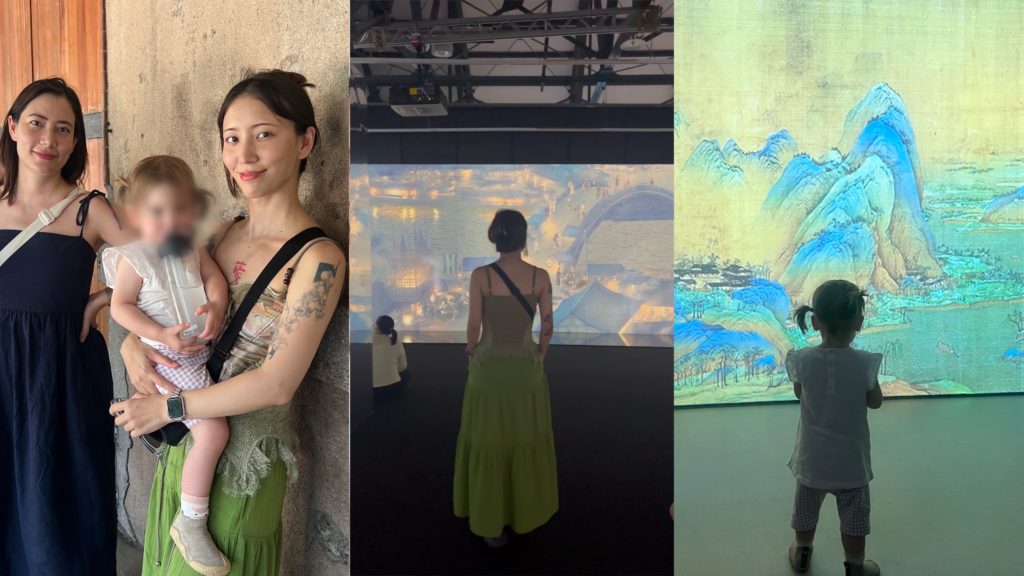
Part 1: Morning Mist and Near Disasters
The journey begins on the outskirts of the city. Out of the morning mist comes a donkey caravan carrying charcoal. As we move deeper, we see the classic Chinese image of 「小橋、流水、人家」 (small bridge, flowing water, and households)—a symbol of peaceful rural life.
But tension is hidden everywhere. Look closely at the willow trees: one is broken and about to crush a passerby. Nearby, a donkey has gone berserk, causing panic in the streets. This isn’t just a “happy” day; it’s a city on the edge.
The Mystery of the Name
- Qingming (清明): Refers to the solar term marking the start of spring and the Tomb Sweeping Festival.
- Shanghe (上河): Refers to the “reopening” of the river. Because the Yellow River flooded easily, the government built dams in winter and removed them during the Qingming Festival to restart shipping.
The most famous scene occurs at the Bian River (汴河). A massive ship is about to crash into a bridge because the navigator isn’t looking ahead. Onlookers scream and throw ropes—a dramatic metaphor for a society losing its direction.
Part 2: Camels, Lazy Soldiers, and Satire
Part 2 Script (Traditional Chinese)
接下來汴河離開我們的視線,來到城外的十字路口,這裡有很多店家,甚至還有一間專門算命的店。隔壁突然空曠冷清了許多,這間宅院的大門很華麗,還在庭院養馬,甚至有自己的防護河,門口還有不允許百姓持有的武器。沒錯,這是宋朝的政府機構,類似於現在的行政中心+地方法院+警察局。但你看看在前面的官兵,一個比一個懶散,甚至有個人露著內褲躺在地上睡覺!
Next, the Bian River leaves our view and arrives at a crossroads outside the city. There are many shops here, including one dedicated entirely to fortune-telling. Right next door, it suddenly becomes far emptier and quieter. The gate of this residence is very elaborate — horses are kept in the courtyard, it even has its own moat, and at the entrance there are weapons ordinary people aren’t allowed to own. That’s right, this is a Song dynasty government office, similar to today’s administrative center, local court, and police station all rolled into one. But look at the soldiers stationed out front — each one lazier than the last, and one of them is even lying on the ground asleep with his underwear showing!
我們再往前過橋後,就是壯麗的汴京城門口,有沒有看到好幾隻駱駝?他們是來自西北方的外國商隊。周圍的人並沒有對這些駱駝感興趣,很顯然有外族商隊是非常平常的事。但,照理說,外國商隊進城,應該要有人檢查呀?但外國商隊來去自如,因為,本來應該看守城門的官兵,又在旁邊偷懶了。
If we continue on and cross the bridge, we arrive at the magnificent gate of the capital city, Bianjing — do you see the several camels? They’re a foreign trading caravan from the northwest. The people around them show no interest in these camels at all, which clearly shows that a foreign caravan was an entirely ordinary sight. But logically speaking, shouldn’t someone be inspecting a foreign caravan as it enters the city? Yet the caravan comes and goes freely, because the soldiers who are supposed to be guarding the gate are, once again, off slacking nearby.
這裡就要說到清明上河圖的另一層含義,「清明」也同時意味著「政治清明」,所以清明上河圖其實是一個諷刺當時宋朝朝廷管理懶散、內鬥不斷的一幅畫。不祥的斷樹、即將失事的幾艘船,官衙沒人執勤,城門無人看守,外國人來去自如,在汴河的下方,甚至有個衣著與旁人都不同的蒙面間諜遠遠地走來,暗喻內憂外患。那張擇端到底要在這幅畫的最後,隱晦的告誡朝廷呢?
This brings us to another layer of meaning in “Along the River During the Qingming Festival.” “Qingming” also carries the meaning of “clean, upright governance,” so the painting is actually a satire of the Song court’s lazy administration and constant infighting at the time. The ominous broken tree, the several boats about to capsize, the government office with no one on duty, the city gate with no one guarding it, foreigners coming and going as they please, and — down along the Bian River — even a masked spy, dressed differently from everyone else, walking toward us in the distance, all hint at troubles both within and beyond the kingdom. So what exactly is Zhang Zeduan subtly warning the court at the very end of this painting?
我們接著城門,正式進汴京城了,那個當下世界上最繁華的都市。一進汴京,你的右手邊是比剛剛更繁華的酒吧,旁邊還有另一家。但在你的左手邊,你會看到一間雅緻的民宿。這間民宿是整幅畫不起眼,但卻最重要的地方。張擇端讓這間民宿正面、近距離的出現,看看裡面有個年邁的學者,靜靜地讀書。旅館的屋頂有著「懸魚」的裝飾,「懸魚」比喻為官清廉、剛正不阿、拒受賄賂。門口掛著招牌寫著「久住」意味著值得長久居住的地方。
Continuing past the city gate, we now officially enter the city of Bianjing — at the time, the most prosperous city in the world. As soon as you enter Bianjing, on your right is a tavern even more bustling than the ones before, with another right beside it. But on your left, you’ll see an elegant inn. This inn is the most unassuming yet most important spot in the entire painting. Zhang Zeduan presents this inn facing forward and up close, and inside, you can see an elderly scholar quietly reading. The inn’s roof features a “hanging fish” (懸魚) decoration — the “hanging fish” symbolizes an official who is incorruptible, upright, and refuses bribes. Above the door hangs a sign reading “Jiuzhu” (long-term stay), meaning a place worth living in for a long time.
再往後走,這幅畫的最後,是一家診所,門口寫著「治酒所傷」,意味著治療酒醉的傷害。前面我們看了那麼多間酒吧,現在我們明白酒吧暗喻著酗酒享樂、麻醉心智、傷害國家,這是張擇端在故事的最後對眾人甚至皇帝的提醒。張擇端要讓看的人去想想,當你走進權力的十字路口,你要成為享樂的酒鬼,還是成為真正為民服務的官員,他要大家清醒,看到這個國家正在發生的事。
Further along, at the very end of the painting, is a clinic, with a sign at the door reading “Treating Injuries from Alcohol,” meaning it treats the harm caused by drunkenness. We saw so many taverns earlier, and now we understand that they symbolize indulgence in alcohol, a numbed mind, and harm to the nation — this is Zhang Zeduan’s final reminder to everyone, even the emperor, at the end of the story. Zhang Zeduan wants viewers to consider: when you step into the crossroads of power, will you become a pleasure-seeking drunkard, or an official who truly serves the people? He wants everyone to wake up and see what is really happening in this country.
張擇端的「清明上河圖」實在太經典,它有很多後世臨仿本。很多人會因為觀賞性更喜歡明朝或清朝版本的「清明上河圖」,那兩個都非常華麗、熱鬧。但宋朝原版的「清明上河圖」,其實是張擇端在政府的支持下耗時三年完成這幅畫的,畢竟他在政府的「翰林圖畫院」工作。你可以想像他一定是受到一定黨派的支持才敢如此創作,代表當時的政治環境雖糟,但不是獨裁極權的氛圍,是一種健康、有力量的政治呼籲,代表著文人的擔當與壯志。明朝的版本是畫給有錢的商人的,而清朝的版本則是畫給剛登基的乾隆皇帝看,沒有底層人民的苦痛,只有上層階級視角的一片祥和。這讓宋朝原版跟後世的臨仿本完全不一樣。
Zhang Zeduan’s “Along the River During the Qingming Festival” is such a classic that it has many later copies and imitations. Many people, for visual appeal, prefer the Ming or Qing dynasty versions of the painting — both of which are far more lavish and lively. But the original Song dynasty version was actually completed by Zhang Zeduan over three years with government support — after all, he worked at the imperial “Hanlin Painting Academy.” You can imagine he must have had backing from a certain faction to dare create something like this, which shows that although the political climate at the time was poor, it wasn’t one of dictatorship or totalitarian control, but rather a healthy, powerful form of political appeal, representing the sense of responsibility and lofty ambition of scholars. The Ming dynasty version was painted for wealthy merchants, while the Qing dynasty version was painted for the newly enthroned Emperor Qianlong — with none of the suffering of ordinary people, only a peaceful scene from the upper class’s point of view. This makes the original Song version completely different from the later imitations.
Part 2 Script (Simplified Chinese)
世界最有名的画(下集)— 中英对照逐段翻译
繁体中文:
接下来汴河离开我们的视线,来到城外的十字路口,这里有很多店家,甚至还有一间专门算命的店。隔壁突然空旷冷清了许多,这间宅院的大门很华丽,还在庭院养马,甚至有自己的防护河,门口还有不允许百姓持有的武器。没错,这是宋朝的政府机构,类似于现在的行政中心+地方法院+警察局。但你看看在前面的官兵,一个比一个懒散,甚至有个人露着内裤躺在地上睡觉!
English:
Next, the Bian River leaves our view and arrives at a crossroads outside the city. There are many shops here, including one dedicated entirely to fortune-telling. Right next door, it suddenly becomes far emptier and quieter. The gate of this residence is very elaborate — horses are kept in the courtyard, it even has its own moat, and at the entrance there are weapons ordinary people aren’t allowed to own. That’s right, this is a Song dynasty government office, similar to today’s administrative center, local court, and police station all rolled into one. But look at the soldiers stationed out front — each one lazier than the last, and one of them is even lying on the ground asleep with his underwear showing!
繁体中文:
我们再往前过桥后,就是壮丽的汴京城门口,有没有看到好几只骆驼?他们是来自西北方的外国商队。周围的人并没有对这些骆驼感兴趣,很显然有外族商队是非常平常的事。但,照理说,外国商队进城,应该要有人检查呀?但外国商队来去自如,因为,本来应该看守城门的官兵,又在旁边偷懒了。
English:
If we continue on and cross the bridge, we arrive at the magnificent gate of the capital city, Bianjing — do you see the several camels? They’re a foreign trading caravan from the northwest. The people around them show no interest in these camels at all, which clearly shows that a foreign caravan was an entirely ordinary sight. But logically speaking, shouldn’t someone be inspecting a foreign caravan as it enters the city? Yet the caravan comes and goes freely, because the soldiers who are supposed to be guarding the gate are, once again, off slacking nearby.
繁体中文:
这里就要说到清明上河图的另一层含义,「清明」也同时意味着「政治清明」,所以清明上河图其实是一个讽刺当时宋朝朝廷管理懒散、内斗不断的一幅画。不祥的断树、即将失事的几艘船,官衙没人执勤,城门无人看守,外国人来去自如,在汴河的下方,甚至有个衣着与旁人都不同的蒙面间谍远远地走来,暗喻内忧外患。那张择端到底要在这幅画的最后,隐晦的告诫朝廷呢?
English:
This brings us to another layer of meaning in “Along the River During the Qingming Festival.” “Qingming” also carries the meaning of “clean, upright governance,” so the painting is actually a satire of the Song court’s lazy administration and constant infighting at the time. The ominous broken tree, the several boats about to capsize, the government office with no one on duty, the city gate with no one guarding it, foreigners coming and going as they please, and — down along the Bian River — even a masked spy, dressed differently from everyone else, walking toward us in the distance, all hint at troubles both within and beyond the kingdom. So what exactly is Zhang Zeduan subtly warning the court at the very end of this painting?
繁体中文:
我们接着城门,正式进汴京城了,那个当下世界上最繁华的都市。一进汴京,你的右手边是比刚刚更繁华的酒吧,旁边还有另一家。但在你的左手边,你会看到一间雅致的民宿。这间民宿是整幅画不起眼,但却最重要的地方。张择端让这间民宿正面、近距离的出现,看看里面有个年迈的学者,静静地读书。旅馆的屋顶有着「悬鱼」的装饰,「悬鱼」比喻为官清廉、刚正不阿、拒受贿赂。门口挂着招牌写着「久住」意味着值得长久居住的地方。
English:
Continuing past the city gate, we now officially enter the city of Bianjing — at the time, the most prosperous city in the world. As soon as you enter Bianjing, on your right is a tavern even more bustling than the ones before, with another right beside it. But on your left, you’ll see an elegant inn. This inn is the most unassuming yet most important spot in the entire painting. Zhang Zeduan presents this inn facing forward and up close, and inside, you can see an elderly scholar quietly reading. The inn’s roof features a “hanging fish” (悬鱼) decoration — the “hanging fish” symbolizes an official who is incorruptible, upright, and refuses bribes. Above the door hangs a sign reading “Jiuzhu” (long-term stay), meaning a place worth living in for a long time.
繁体中文:
再往后走,这幅画的最后,是一家诊所,门口写着「治酒所伤」,意味着治疗酒醉的伤害。前面我们看了那么多间酒吧,现在我们明白酒吧暗喻着酗酒享乐、麻醉心智、伤害国家,这是张择端在故事的最后对众人甚至皇帝的提醒。张择端要让看的人去想想,当你走进权力的十字路口,你要成为享乐的酒鬼,还是成为真正为民服务的官员,他要大家清醒,看到这个国家正在发生的事。
English:
Further along, at the very end of the painting, is a clinic, with a sign at the door reading “Treating Injuries from Alcohol,” meaning it treats the harm caused by drunkenness. We saw so many taverns earlier, and now we understand that they symbolize indulgence in alcohol, a numbed mind, and harm to the nation — this is Zhang Zeduan’s final reminder to everyone, even the emperor, at the end of the story. Zhang Zeduan wants viewers to consider: when you step into the crossroads of power, will you become a pleasure-seeking drunkard, or an official who truly serves the people? He wants everyone to wake up and see what is really happening in this country.
繁体中文:
张择端的「清明上河图」实在太经典,它有很多后世临仿本。很多人会因为观赏性更喜欢明朝或清朝版本的「清明上河图」,那两个都非常华丽、热闹。但宋朝原版的「清明上河图」,其实是张择端在政府的支持下耗时三年完成这幅画的,毕竟他在政府的「翰林图画院」工作。你可以想像他一定是受到一定党派的支持才敢如此创作,代表当时的政治环境虽糟,但不是独裁极权的氛围,是一种健康、有力量的政治呼吁,代表著文人的担当与壮志。明朝的版本是画给有钱的商人的,而清朝的版本则是画给刚登基的干隆皇帝看,没有底层人民的苦痛,只有上层阶级视角的一片祥和。这让宋朝原版跟后世的临仿本完全不一样。
English:
Zhang Zeduan’s “Along the River During the Qingming Festival” is such a classic that it has many later copies and imitations. Many people, for visual appeal, prefer the Ming or Qing dynasty versions of the painting — both of which are far more lavish and lively. But the original Song dynasty version was actually completed by Zhang Zeduan over three years with government support — after all, he worked at the imperial “Hanlin Painting Academy.” You can imagine he must have had backing from a certain faction to dare create something like this, which shows that although the political climate at the time was poor, it wasn’t one of dictatorship or totalitarian control, but rather a healthy, powerful form of political appeal, representing the sense of responsibility and lofty ambition of scholars. The Ming dynasty version was painted for wealthy merchants, while the Qing dynasty version was painted for the newly enthroned Emperor Qianlong — with none of the suffering of ordinary people, only a peaceful scene from the upper class’s point of view. This makes the original Song version completely different from the later imitations.
As we pass through the city gates, we see camels (駱駝) from foreign merchant caravans. While they represent prosperity, they also represent a security risk. In the Song Dynasty, foreign traders were supposed to be inspected, but the soldiers at the gate are slacking off—one is even caught napping on the ground!
This is where the deeper meaning of the painting emerges. In Chinese, “Qingming” also means “Political Clarity” (政治清明). By showing us broken trees, near-shipwrecks, and lazy guards, Zhang Zeduan was actually criticizing the government’s poor management and internal weaknesses.
The Warning at the Crossroads
The painting ends at a medical clinic with a sign that reads: 「治酒所傷」 (Treating injuries caused by alcohol).
After passing countless wine houses and bars (including the Song Dynasty version of “Foodpanda” delivery!), this final scene serves as a warning to the Emperor: Indulgence and negligence lead to the weakening of the state.
Why the Original Song Version is Unique
Later copies of this painting from the Ming and Qing Dynasties are more colorful, but they often remove the “grit.” The Qing version, for example, was painted for the Qianlong Emperor and shows only a harmonious, perfect world.
The Song original is special because it was created at the Hanlin Academy, suggesting that even in a troubled era, the Song government allowed space for critical, scholarly voices.
Key Vocabulary Table
| Chinese (Trad/Simp) | Pinyin | English Definition |
|---|---|---|
| 清明上河圖 / 清明上河图 | Qīngmíng Shànghé Tú | Riverside Scene at Qingming Festival |
| 手卷 | shǒujuǎn | Handscroll (painting format) |
| 宋朝 | Sòngcháo | Song Dynasty |
| 汴京 | Biànjīng | The capital city (modern-day Kaifeng) |
| 汴河 | Biànhé | Bian River / Canal |
| 二十四節氣 / 二十四节气 | èrshísì jiéqì | The 24 Solar Terms |
| 駱駝 / 骆驼 | luòtuo | Camel |
| 政治清明 | zhèngzhì qīngmíng | Political clarity / Good governance |
| 諷刺 / 讽刺 | fěngcì | Satire / To satirize |
| 翰林圖畫院 / 翰林图画院 | Hànlín túhuàyuàn | Imperial Painting Academy |
Ready to Master Classical Chinese?
If you want to dive deeper into the language of history and art, we’ve prepared a Skritter Deck featuring all the advanced vocabulary mentioned in this lesson. Master these terms, and you’ll be ready to watch any historical C-drama without subtitles!
[Download the Skritter Deck Here]
Study the deck on Skritter. Download our app on iOS or Google Play. Open Directly in Skritter here.
Don’t forget to subscribe to our newsletter for more deep dives into Chinese culture and language!