
Part 1
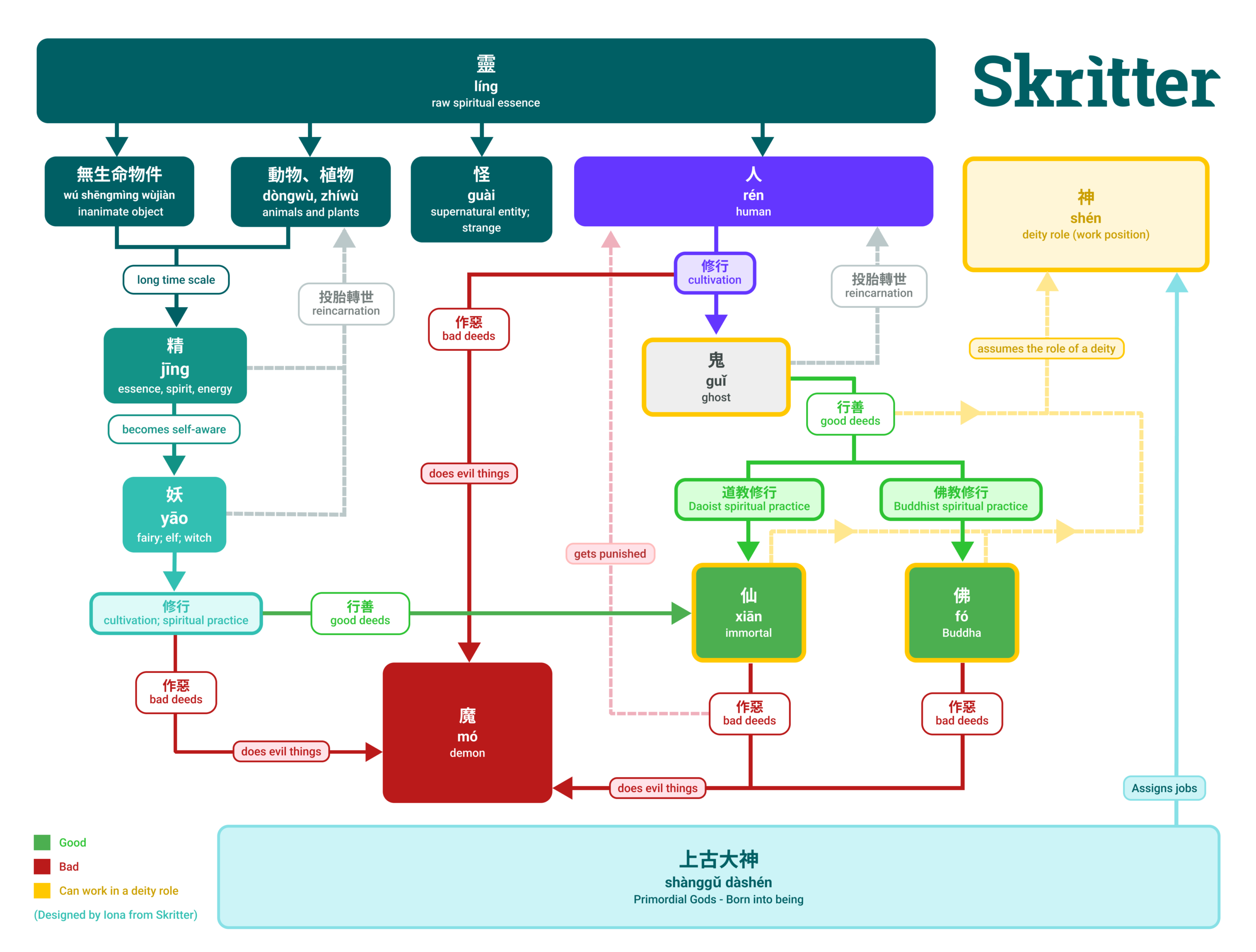
If you’ve ever dipped into Chinese or Taiwanese fantasy — whether through TV dramas, novels, or films — you’ve probably noticed an overwhelming cast of supernatural beings: 妖 (yāo), 魔 (mó), 精 (jīng), 怪 (guài), 神 (shén), 佛 (fó), 鬼 (guǐ)…
This isn’t just creative world-building. It’s a deeply rooted belief system woven into Chinese culture, shaped by Daoism, Buddhism, folk religion, and natural philosophy. It defines how people think about good and evil, life and death, and the spiritual realm itself.
Before we can recommend great Chinese fantasy content, we need to give you a proper introduction to the players. Consider this your field guide to the Chinese mystical world — Part 1.
靈/灵 (líng) — Spirit / Spiritual Essence
Everything begins with 靈 (líng).
In the Chinese worldview, there’s a foundational saying: 萬物皆有靈 (wànwù jiē yǒu líng) — “all things possess spirit.” Rocks, trees, rivers, old objects — everything carries a latent spiritual presence.
靈 is like raw spiritual energy. It has no consciousness, no shape — just a dormant potential. But given enough time, emotion, or exposure to natural forces, 靈 can begin to transform. Every other mystical being we’ll discuss starts here.
精 (jīng) — Essence Spirit
Once something has accumulated enough 靈, it begins absorbing what’s called 日月精華 (rìyuè jīnghuá) — the essence of the sun and moon. Think of it as spiritual refinement through the passage of time.
When enough energy gathers, a transformation occurs: 靈 becomes 精 (jīng). A 精 has awareness — it can think, feel, and act on desires.
Crucially, 精 is morally neutral. It’s not inherently good or bad.
Famous examples:
- 孫悟空 (Sūn Wùkōng) — the Monkey King from Journey to the West, born from a stone that absorbed spiritual essence.
- 賈寶玉 (Jiǎ Bǎoyù) — from Dream of the Red Chamber, also a stone spirit who took human form.
修道 (xiūdào) — Cultivation / Spiritual Practice
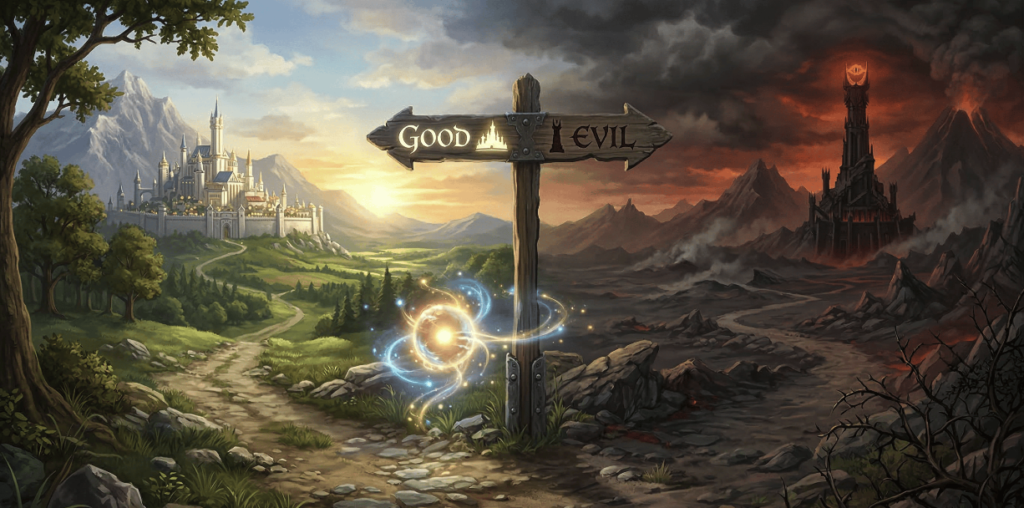
Once a 精 becomes self-aware, it faces moral choices. This is where 修行 (xiūxíng) or 修道 (xiūdào) — cultivation — comes in.
Choosing the righteous path at each moral crossroad is what cultivation is all about. As beings progress, they often evolve into more human-like forms.
Why human? Because humans are called 萬物之靈 (wànwù zhī líng) — “the spirit of all living things.” Humans are seen as the species with self-reflection and the highest potential for spiritual liberation.
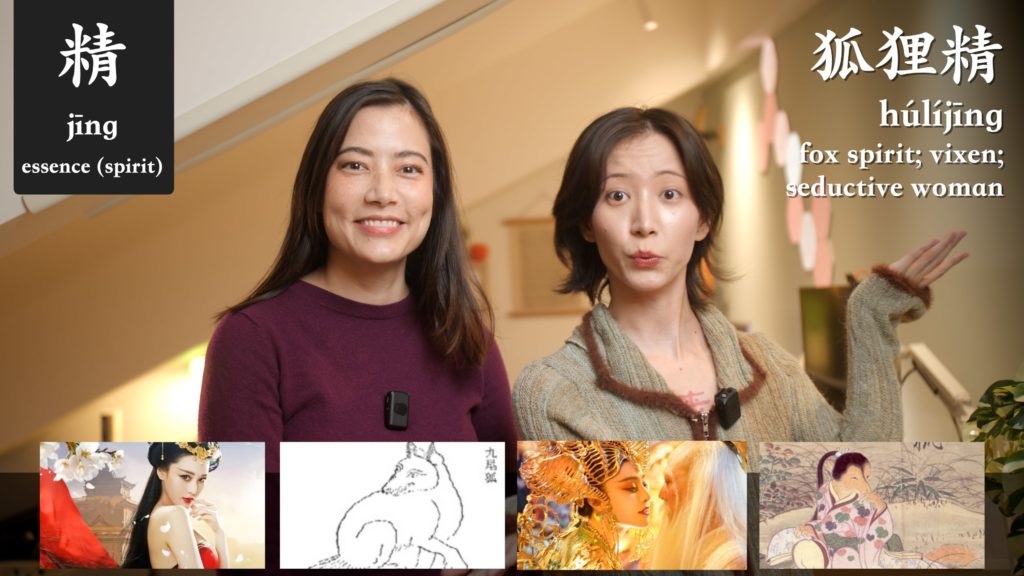
This is why many 精 appear as beautiful human women — like the 狐狸精 (húli jīng), the fox spirit, who seduces men. In modern Chinese, 狐狸精 is actually used as an insult — a way to shame women who challenge social norms.
Another classic example: 琵琶精 (pípá jīng) — a pipa (Chinese lute) that has absorbed years of emotion and music, transforms into a woman, and falls in love with a scholar.
Cultural note: Notice how 精 characters are usually female? This reflects deep-seated patriarchal anxieties about feminine power in traditional Chinese society.
妖 (yāo) — Fairy / Shapeshifting Spirit
When a 精 gains more experience and power, it becomes a 妖 (yāo).
妖 tend to have stronger moral complexity. They can be extremely selfless or terrifyingly evil. Like humans, they wrestle with their own nature and make difficult choices.
You might be surprised that 妖 can be good — the character itself carries negative connotations. It contains the radical 女 (nǚ, female), and was historically used to shame women who defied norms: 妖精 (yāojing), 妖孽 (yāoniè) — all insults. This is remarkably similar to how “witch” was used in the West.
In older folktales, though, you’ll find stories of 妖 who are deeply selfless, even sacrificing themselves for their human friends. The key difference from 精 is that 妖 have been around longer, and their moral landscape is richer and more nuanced.
怪 (guài) — Anomaly / Monster
So far, we’ve been talking a lot about feminine spirits — because traditional patriarchal culture was deeply anxious about feminine power.
怪 (guài) is different. It represents anomalies — unnatural phenomena, chaotic forces, and things that simply defy explanation.
怪 isn’t necessarily moral or immoral — it’s just strange. In ancient times, encountering something 怪 was seen as an omen, a warning from the gods.
Think of headless monsters, nightmare creatures, or the legendary 魑魅魍魎 (chīmèi wǎngliǎng) — four characters, each representing a type of 怪 dwelling in dark forests or damp caves. They symbolize disorder, impurity, and the unknown.
人 (rén) — Human
Where do humans fit in all this? Humans are considered the most 陽 (yáng)-filled beings — brimming with life force, vitality, and spiritual potential.
For a spirit to progress along “the path,” it needs to absorb 陽氣 (yángqì). The righteous way to do this is through patience: meditation, abstinence, charity, scripture recitation, and inner alchemy. It’s hard work.
But beings like 妖, 精, and 怪 can take shortcuts — by stealing 陽 from humans through seduction, fear, or consuming flesh. This is the basis of most ghost and demon stories in Chinese folklore. These shortcuts are known as 旁門左道 (pángmén zuǒdào) — deviant paths.
鬼 (guǐ) — Ghost
When a person dies, their soul leaves the body and becomes a 鬼 (guǐ) — a ghost.
This is why Chinese families burn 紙錢 (zhǐqián) — ghost money — because the dead are believed to need money in the afterlife, just like the living.
If a ghost escapes the proper afterlife process — due to anger, injustice, or unfinished business — it becomes a 孤魂野鬼 (gūhún yěguǐ), a wandering lonely ghost, or a 冤魂 (yuānhún), a wronged spirit. This is why temples perform 超渡 (chāodù), ritual deliverance — to send the ghost to the right realm before it loses its mind and harms people.
To completely destroy a soul is called 魂飛魄散 (húnfēi pòsàn) — soul annihilation. It’s one of the most terrifying concepts in Chinese culture.
And in Taiwan, the 7th lunar month is called 鬼月 (guǐyuè) — Ghost Month — when ghosts are believed to roam freely and visit the living.
The Big Takeaway
You may have noticed that in this whole system, no creature is judged as inherently good or evil. Rather, every being — from the humblest stone spirit to the most powerful 妖 — is judged by its choices and actions.
And that is what makes Chinese fantasy so endlessly fascinating.
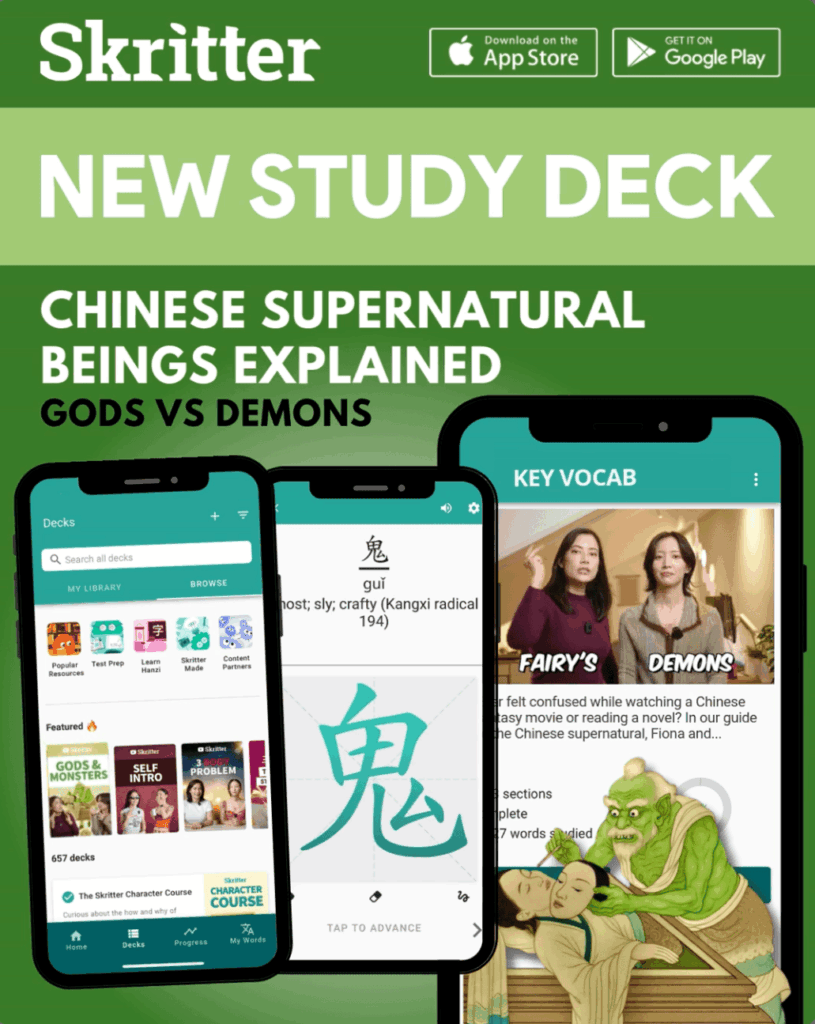
Study the deck on Skritter. Download our app on iOS or Google Play. Open Directly in Skritter here.
Key Vocabulary
| Traditional | Simplified | Pinyin | Definition |
|---|---|---|---|
| 靈 | 灵 | líng | spirit; spiritual essence |
| 精 | 精 | jīng | essence spirit; sprite |
| 修道 | 修道 | xiūdào | spiritual cultivation; to practice the Way |
| 修行 | 修行 | xiūxíng | spiritual practice; self-cultivation |
| 妖 | 妖 | yāo | fairy; shapeshifting spirit |
| 怪 | 怪 | guài | anomaly; monster; strange |
| 鬼 | 鬼 | guǐ | ghost |
| 人 | 人 | rén | human; person |
| 神 | 神 | shén | god; deity |
| 佛 | 佛 | fó | Buddha |
| 魔 | 魔 | mó | demon; devil |
| 仙 | 仙 | xiān | immortal |
| 萬物皆有靈 | 万物皆有灵 | wànwù jiē yǒu líng | all things possess spirit |
| 日月精華 | 日月精华 | rìyuè jīnghuá | essence of the sun and moon |
| 狐狸精 | 狐狸精 | húli jīng | fox spirit (also: seductress) |
| 陽氣 | 阳气 | yángqì | yang energy; life force |
| 紙錢 | 纸钱 | zhǐqián | ghost money; joss paper |
| 孤魂野鬼 | 孤魂野鬼 | gūhún yěguǐ | wandering lonely ghost |
| 魂飛魄散 | 魂飞魄散 | húnfēi pòsàn | soul annihilation |
| 鬼月 | 鬼月 | guǐyuè | Ghost Month (7th lunar month) |
| 超渡 | 超渡 | chāodù | ritual deliverance (for ghosts) |
| 旁門左道 | 旁门左道 | pángmén zuǒdào | deviant path; unorthodox method |
| 萬物之靈 | 万物之灵 | wànwù zhī líng | the spirit of all living things (humans) |
| 琵琶精 | 琵琶精 | pípá jīng | pipa spirit |
| 魑魅魍魎 | 魑魅魍魉 | chīmèi wǎngliǎng | evil spirits; demons and monsters |
Part 2
Today we’re going up the ranks to look at 神 (gods), 仙 (immortals), 魔 (demons), and 佛 (Buddhas) — plus the mysterious 上古大神 (primordial gods) who sit above the entire system. Along the way, we’ll learn why immortals have to survive lightning strikes, and the difference between a demon and a “heart demon.” <!– Embed YouTube video here –>
Let’s pick up where we left off: ghosts. Is there ever a scenario where a ghost is allowed to stay in the human realm legally?
There’s one special case — it becomes a 神 (shén).
In everyday belief, 神 isn’t just a celestial being. It’s actually a position — a spiritual bureaucratic job. If someone did a lot of good deeds in life, after death they might be recognised by higher-level deities and offered a role. Think of it as a cosmic job offer: “Hey, we noticed you did a lot of good while you were alive. How about becoming the local earth god before you reincarnate?”
土地公 (tǔdì gōng) — Earth God
The 土地公 is a kind of spiritual neighbourhood chief — one of the most common gods you’ll encounter in Taiwanese temples. Most of the 神 you see in temples were once real people who were honoured after death and assigned a divine post.
Every god has a specific duty. Fertility gods help parents, exam gods help students, wealth gods help business owners. Walking into a Taiwanese temple honestly feels like visiting a multi-dimensional government office and submitting your request.
The ghost money distinction
Fun fact: the paper money (紙錢/纸钱 · zhǐqián) you burn for 神 is different from the kind you burn for 鬼. The money for gods is like an official salary distributed by the spiritual government. Don’t mix them up — or you might accidentally bribe the wrong official!
仙 (xiān) — Immortals
Remember cultivation (修行/修道)? For humans, the ultimate goal of the Daoist path is to become a 仙 (xiān) — an immortal.
In Daoist theory, anything with 靈 can become immortal. By cultivating long enough, a being can transcend the reincarnation cycle (輪迴/轮回 · lúnhuí), achieving eternal youth and freedom. This was the quest and obsession of many Chinese emperors throughout history.
The character 仙 itself tells the story: it’s made up of 人 (person) and 山 (mountain) — a person who retreats from the world to live in nature, mastering the Dao and living in harmony with all things.
To become a true immortal, one must cultivate for hundreds or even thousands of years, without harming others or consuming humans. It’s extremely difficult, but it’s the highest spiritual goal for many beings.
天劫 (tiānjié) — The Heavenly Trial
Before becoming immortal, one must pass the 天劫 (tiānjié) — the heavenly trial. Most commonly, this takes the form of a 雷劫 (léijié) — a lightning trial. If you survive being struck by divine lightning, you’ve succeeded. If not… game over.
Since this is an official process within the celestial bureaucracy, immortals can also be punished. Many stories describe immortals or gods being demoted for breaking rules and sent to live among humans.
謫仙 (zhéxiān) — Banished Immortal
The Tang dynasty poet 李白 (Lǐ Bái) was famously called a 謫仙 — a “banished immortal” — because people believed his genius was too extraordinary to be merely human. He must have been a celestial being who was sent down to walk among mortals.
魔 (mó) — Demon
But what if you fail the heavenly trial?
Beings who were cultivating to become immortals but get stuck due to desire, obsession, ego, or fear can fall into darkness. This is what we call 走火入魔 (zǒuhuǒ rùmó) — literally, “the fire goes the wrong way, and you become a demon.”
In Western terms, Lucifer is a useful comparison: a once-radiant being who fell from grace.
魔 doesn’t just mean “evil” — it represents any force that resists or corrupts the righteous path. That’s why we have the concept of 心魔 (xīnmó) — the “heart demon” or inner demon. It’s that voice in your head whispering doubt or temptation just when you’re about to level up.
走火入魔 (zǒuhuǒ rùmó) — Going off the rails
Even today, 走火入魔 is used in daily life to describe someone who’s lost control in their pursuit of something — whether that’s money, power, fame, or even love. It captures the idea that obsession itself is the demon, not some external monster.
佛 (fó) — Buddhas
佛 (fó), or Buddha, represents someone who has achieved supreme wisdom and enlightenment.
Unlike 仙, who cultivates through Daoist discipline and detachment, 佛 follows Buddhist principles — seeking truth through introspection and compassion.
A 佛 draws power from inner awakening, not external rituals. You don’t “pray” to a Buddha the way you ask a 神 for help. Instead, 佛 encourages you to find your own truth.
In stories, 佛 often possesses immense spiritual power, sometimes even greater than Daoist deities. They can subdue demons with a single 佛印 (fóyìn) — a Buddha seal. But when compared to the 上古大神 (primordial gods), even Buddhas must bow in respect.
佛 and 神 — intertwined in real life
In real life, many temples in Taiwan house both 佛 and 神 side by side — a sign of how deeply intertwined Buddhism and Daoism have become in Chinese folk religion. It’s not unusual to bow to a Buddhist figure and a Daoist deity in the same visit.
上古大神 (shànggǔ dàshén) — Primordial / Ancient Gods
Everything we’ve discussed so far — from spirits to gods to demons — starts from the bottom and works upward. But the 上古大神 are different.
They were never human. They didn’t cultivate their way up. They were born of the universe itself. They represent primordial forces, often tied to creation myths.
While 神 (gods) are often moral guides who uphold cosmic order and balance, 上古大神 represent raw, chaotic natural power.
盤古 (Pángǔ) — Creator of Heaven and Earth
盤古 is the being who split the sky and earth apart, creating the world as we know it. His body became the mountains, rivers, and everything in between.
女媧 (Nǚwā) — Mother of Humanity
女媧 moulded humans from clay and later repaired the sky when it cracked. She’s one of the most important figures in Chinese creation mythology.
玉皇大帝 (Yùhuáng Dàdì) — The Jade Emperor
After creating the world, the primordial gods didn’t interfere much. But someone still had to govern it. So they chose one being from among billions of cultivators: 玉皇大帝 — the Jade Emperor. He became the ruler of Heaven and established the celestial bureaucracy. All the gods you pray to in temples today? They were appointed by him.
That’s why, when entering any temple in Taiwan, the first thing you do is look up and bow toward the sky — to show respect to the Jade Emperor before speaking to any lesser god inside.
The Heart of It All
In the world of Chinese mythology and Daoist philosophy, your origin doesn’t define you — your choices do.
妖 can become 仙. 人 can fall into 魔. 神 can be corrupted. And 魔 can turn their heart and become 佛.
This is the beauty and compassion of Chinese mythology. Your birth is not your destiny — your choices are.
Key Vocabulary — Part 2
| Traditional | Simplified | Pinyin | Definition |
|---|---|---|---|
| 神 | 神 | shén | god; deity (a spiritual position) |
| 仙 | 仙 | xiān | immortal (Daoist) |
| 魔 | 魔 | mó | demon; any force that corrupts the path |
| 佛 | 佛 | fó | Buddha; enlightened being |
| 上古大神 | 上古大神 | shànggǔ dàshén | primordial / ancient gods |
| 土地公 | 土地公 | tǔdì gōng | Earth God; local deity |
| 天劫 | 天劫 | tiānjié | heavenly trial |
| 雷劫 | 雷劫 | léijié | lightning trial |
| 輪迴 | 轮回 | lúnhuí | reincarnation cycle |
| 走火入魔 | 走火入魔 | zǒuhuǒ rùmó | to go off the rails; lose oneself in obsession |
| 心魔 | 心魔 | xīnmó | inner demon; psychological obstacle |
| 謫仙 | 谪仙 | zhéxiān | banished immortal |
| 佛印 | 佛印 | fóyìn | Buddha seal (spiritual power) |
| 盤古 | 盘古 | Pángǔ | Pangu; creator of heaven and earth |
| 女媧 | 女娲 | Nǚwā | Nüwa; mother of humanity |
| 玉皇大帝 | 玉皇大帝 | Yùhuáng Dàdì | Jade Emperor; ruler of Heaven |
| 關聖帝君 | 关圣帝君 | Guān Shèng Dìjūn | Emperor Guan; god of war and righteousness |
| 李白 | 李白 | Lǐ Bái | Li Bai; Tang dynasty poet |
Want to master this vocabulary? Study all the terms from Part 1 and Part 2 with flashcards, writing practice, and spaced repetition in the Skritter app.
Missed Part 1? Read our Beginner’s Guide to Chinese Supernatural Beings: 靈, 精, 妖, 怪, 鬼 and More to start from the beginning.