

There is perhaps nothing more satisfying—and simultaneously annoying—than telling a friend, “I told you so.” Whether they bought a bad coffee you warned them about or forgot their umbrella on a rainy day, sometimes you just have to let them know you were right.
In Chinese, there are several ways to express this sentiment. We’re going to look at the casual ways to rub it in, a traditional proverb about listening to wisdom, and a kinder way to offer comfort when a friend has made a genuine mistake.
Warning: Be careful with the context! You should only use the first few phrases for small, inconsequential things. If something serious happens, using these phrases can lack empathy and make you sound insensitive.
Part 1: The Casual “I Told You So”
Let’s start with the most common, colloquial ways to point out that you were right. These are perfect for when a friend tries a viral bubble tea that turns out to be average, or buys cheap equipment that breaks immediately.
The Classic
This is short, punchy, and very common.
- Chinese: 你看,我就说吧! (你看,我就說吧!)
- Pinyin: [Nǐ kàn, wǒ jiù shuō ba!]
- Meaning: Look, I said so! (See, I told you so!)
Seeking Validation
If you want to be a little bit smug and ask for confirmation that you were right, use this variation:
- Chinese: 你看,是不是?! (你看,是不是?!)
- Pinyin: [Nǐ kàn, shì bu shì?!]
- Meaning: See? Am I right?! (Didn’t I say so?)
The “I Warned You”
What if you warned your friend many times, and they still ignored you? You can emphasize the frequency of your warnings:
- Chinese: 你看,我跟你说几百次了吧。 (你看,我跟你說幾百次了吧。)
- Pinyin: [Nǐ kàn, wǒ gēn nǐ shuō jǐ bǎi cì le ba.]
- Meaning: Look, I’ve told you hundreds of times.
Frustrated Disbelief
Use this when you are frustrated that they refused to trust your wisdom:
- Chinese: 你看,我讲了你又不信。 (你看,我講了你又不信。)
- Pinyin: [Nǐ kàn, wǒ jiǎng le nǐ yòu bù xìn.]
- Meaning: Look, I told you, but you wouldn’t believe me.
The Stubborn Friend
Finally, if someone stubbornly went against your advice, you can use the word 偏 (piān), which emphasizes doing something contrary to what is expected or advised.
- Chinese: 你看,早就跟你说过了,你偏不听。 (你看,早就跟你說過了,你偏不聽。)
- Pinyin: [Nǐ kàn, zǎo jiù gēn nǐ shuō guò le, nǐ piān bù tīng.]
- Meaning: Look, I told you ages ago, but you insisted on not listening.
Part 2: The Traditional Proverb
There is a slightly more literary, “old school” way to deliver this message. You will often hear parents or older generations say this to younger people to imply a hierarchy of experience.
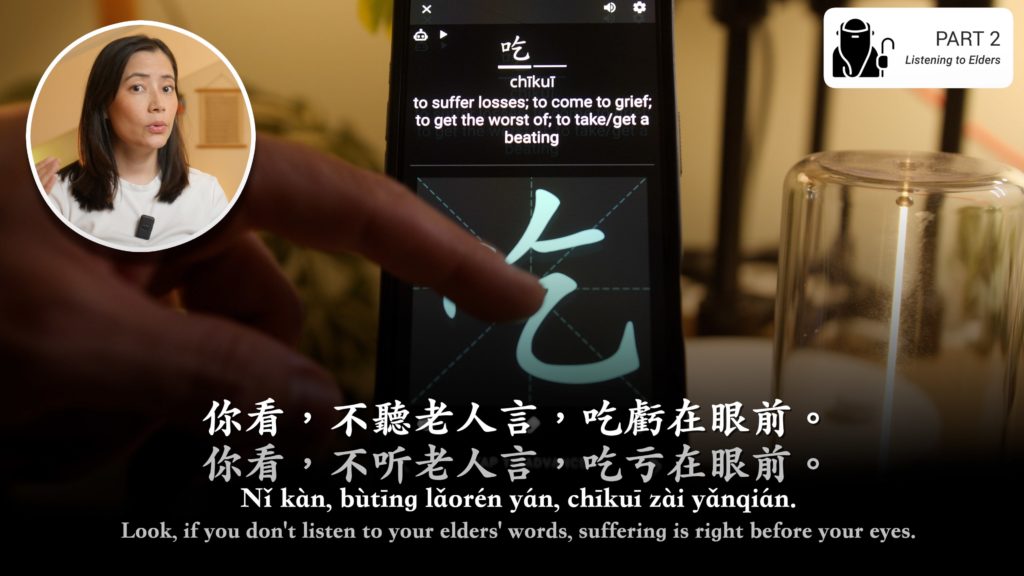
- Chinese: 不听老人言,吃亏在眼前。 (不聽老人言,吃虧在眼前。)
- Pinyin: [Bù tīng lǎorén yán, chīkuī zài yǎnqián.]
- Meaning: If you don’t listen to the old man’s (elders) words, suffering is right before your eyes.
Here, 吃亏 (chī kuī) means to suffer a loss, and 在眼前 (zài yǎn qián) means immediately or right in front of you. It implies, “I have more experience, so you should have listened.”
Study the deck on Skritter. Download our app on iOS or Google Play. Open Directly in Skritter here.
Part 3: The Empathetic Approach
If your friend actually messed up and is feeling bad, the previous phrases might be too mean. If you want to be comforting rather than blaming, try this idiom.
- Chinese: 旁观者清,当局者迷。 (旁觀者清,當局者迷。)
- Pinyin: [Pángguānzhě qīng, dāngjúzhě mí.]
- Meaning: The bystander sees clearly, while the one involved is confused.
This acknowledges that it is hard to see the truth when you are in the middle of a situation. You can follow it up with a comforting sentence:
- Chinese: 没事的,很多事就是要经历过才懂。 (沒事的,很多事就是要經歷過才懂。)
- Pinyin: [Méishìde, hěnduō shì jiùshì yào jīnglì guò cái dǒng.]
- Meaning: It’s okay, there are many things you only understand after experiencing them yourself.
Part 4: Having Foresight
Finally, we have a great idiom for the concept of “hindsight is 20/20” or simply claiming you knew it all along.
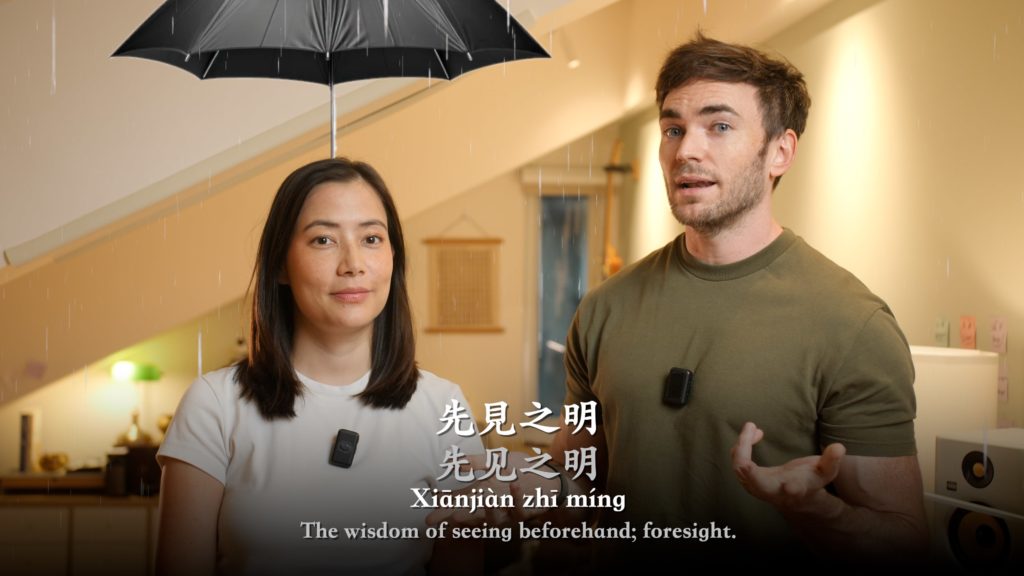
- Chinese: 先见之明 (先見之明)
- Pinyin: [Xiān jiàn zhī míng]
- Meaning: Foresight (Literally: The wisdom of seeing beforehand).
If your friend predicted rain and brought an umbrella while everyone else got soaked, you could say:
- “She really has 先见之明 (xiān jiàn zhī míng)!”
Vocabulary Review
Here are the key words and phrases from the post to help you practice.
| Simplified | Traditional | Pinyin | English |
| 你看 | 你看 | Nǐ kàn | Look / See |
| 我就说吧 | 我就說吧 | wǒ jiù shuō ba | I said so / I told you so |
| 偏 | 偏 | piān | Stubbornly / Contrary to expectation |
| 吃亏 | 吃虧 | chī kuī | To suffer a loss / To come to grief |
| 在眼前 | 在眼前 | zài yǎn qián | Right before one’s eyes / Imminent |
| 旁观者清 | 旁觀者清 | pángguānzhě qīng | The bystander sees clearly |
| 当局者迷 | 當局者迷 | dāngjúzhě mí | The person involved is confused |
| 先见之明 | 先見之明 | xiān jiàn zhī míng | Foresight / Prophetic vision |
Next time your friend ignores your advice and eats street food that makes them sick, you know exactly what to say! (But remember, try to use the nice version if they are actually feeling unwell).

Study the deck on Skritter. Download our app on iOS or Google Play. Open Directly in Skritter here.